
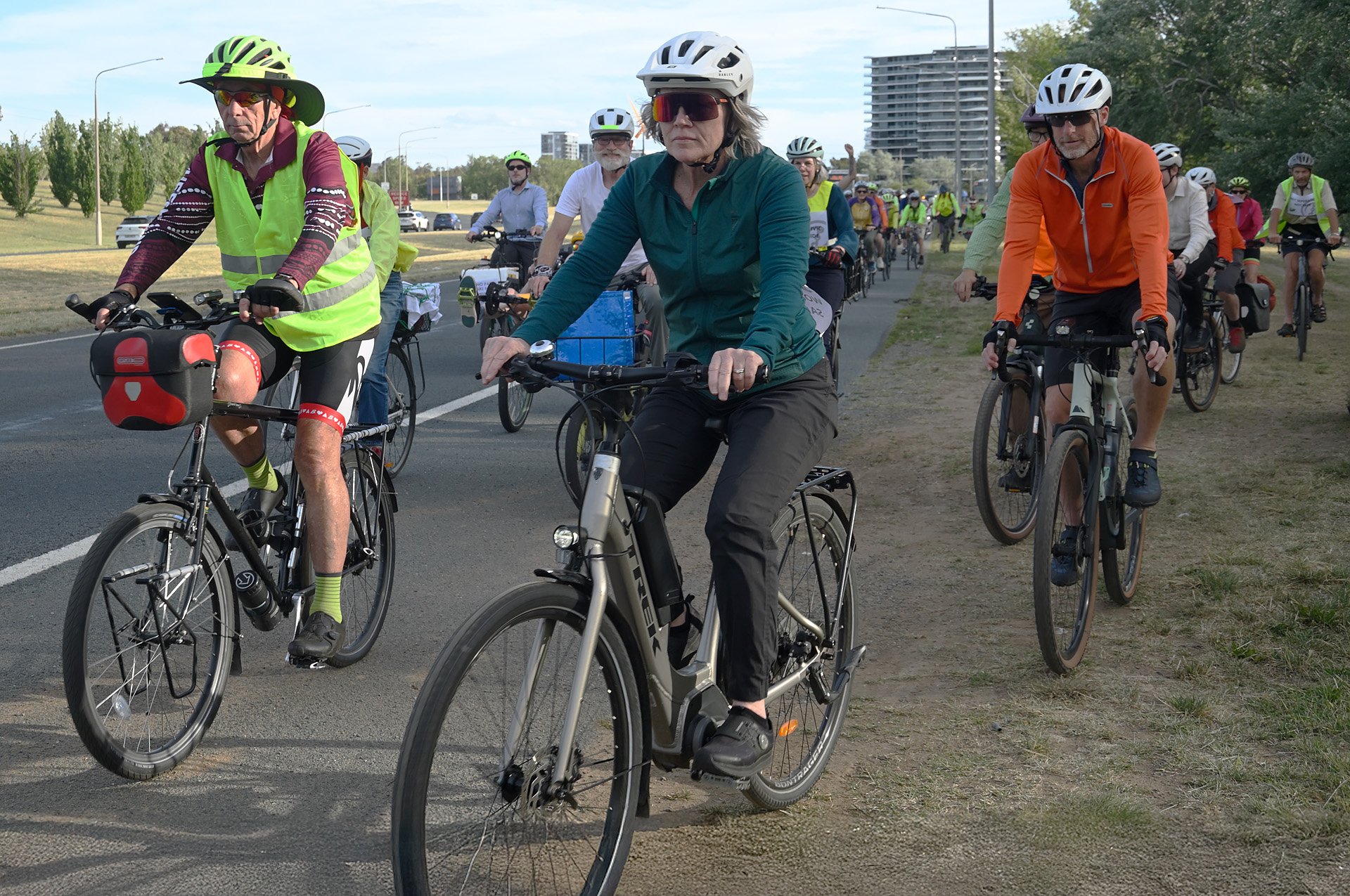
Getting started with cycling
Start riding. We’ll help with the rest.
Never learned, returning after years away or ready to make your first trip? This guide takes you from “where do I begin?” to a first ride that feels manageable.
No expensive bike, special clothing or high level of fitness required.
Start with what is stopping you
What would make riding feel possible?
You do not need to read everything before you begin. Choose the barrier that matters today and go directly to the help you need.
I have never ridden or it has been years
Build balance, braking and confidence with patient instruction away from traffic.
Explore Cycle Well 02 · I need a bikeI want to try riding before I buy
Borrow a refurbished, safety-checked bicycle for free through the Bike Library.
Borrow a bike 03 · I need a routeI can ride, but I do not know where to go
Find Canberra maps, route ideas and planning tools for a comfortable first trip.
Find a route 04 · I need companyI would feel better with someone beside me
Ask a local Ride Guide to help plan or practise an unfamiliar journey.
Meet the Ride GuidesYour first 30 minutes
Keep the first ride small and successful.
Your first goal is not speed or distance. It is finishing with enough confidence to want to ride again.
Fit the basics
Adjust the helmet and saddle. Make sure you can reach both brake levers without stretching.
Check the bike
Check air, brakes and chain. If the bike has been stored for a long time, arrange a service first.
Practise control
In a traffic-free space, rehearse starting, stopping, turning and changing to an easier gear.
Ride an easy loop
Choose a flat, familiar path. Turn back while you still feel comfortable, rather than waiting until you are exhausted.
Save or print this
First-ride checklist
Tick these off before you roll. If something important is not right, fix it rather than hoping for the best.
Bike and helmet setup
Comfort and control come before equipment.
A basic bike that fits and works properly is better than an expensive bike that makes you feel stretched, unstable or sore.
Make it fit
Four adjustments that matter.
A bike shop can help if the position feels wrong. Stop if you experience persistent pain or numbness.
For normal riding, your knee should retain a slight bend at the bottom of the pedal stroke. Complete beginners can lower the saddle temporarily so their feet reach the ground.
You should hold the bars and reach the brakes with relaxed shoulders and slightly bent elbows. Your posture should not feel locked or stretched.
About two fingers above the eyebrows, straps forming a V below each ear, and room for one finger under the chin strap.
Wear comfortable layers and closed shoes with grip. Tuck away loose laces, wide trousers and anything that could catch.
The legal essentials in the ACT
Your bike must be ready for the conditions.
For an ordinary daytime ride you need less gear than marketing may suggest. These essentials still matter.
Wear it securely fastened whenever you ride.
Both brake controls should be easy to reach and stop the bike predictably.
Use a bell or horn to alert other path users before passing.
In darkness or poor light, use a white front light, red rear light and red rear reflector.
Not sure which bike to choose?
Start with where you want to ride, your preferred posture and what you need to carry. Borrowing or test-riding first can prevent an expensive mismatch.
Use the bike-buying guidePractise away from traffic
Six skills make every ride feel easier.
Use a quiet court, empty car park or wide traffic-free path. Practise one skill at a time and stop before fatigue makes learning harder.
01Start without wobbling
Put one pedal in a strong starting position, look ahead and push down as you lift onto the saddle. Use an easy-to-middle gear so the pedal moves without spinning too freely.
02Stop smoothly
Practise squeezing both brakes progressively while keeping the bike straight. Brake before a corner, not sharply inside it. Put one foot down only as you come to a stop.
03Look where you want to go
Keep your eyes ahead rather than fixed on the front wheel. The bike follows your gaze, and looking further ahead gives you more time to respond.
04Use easier gears early
Change to an easier gear before a hill or before you are struggling. Keep pedalling lightly while shifting. There is no prize for forcing a hard gear. Walking is always allowed.
05Scan and signal
Practise a quick shoulder check while holding a straight line. Signal only when stable; your first job is always maintaining control of the bike.
06Pass people calmly
Slow down, alert early, wait for space and pass with room. On shared paths, give way to people walking and expect children, dogs and other users to move unexpectedly.
Plan for comfort, not speed
The best first route is rarely the shortest.
Choose the route that reduces stress: shared paths, quiet streets, clear crossings and places where you can pause safely.
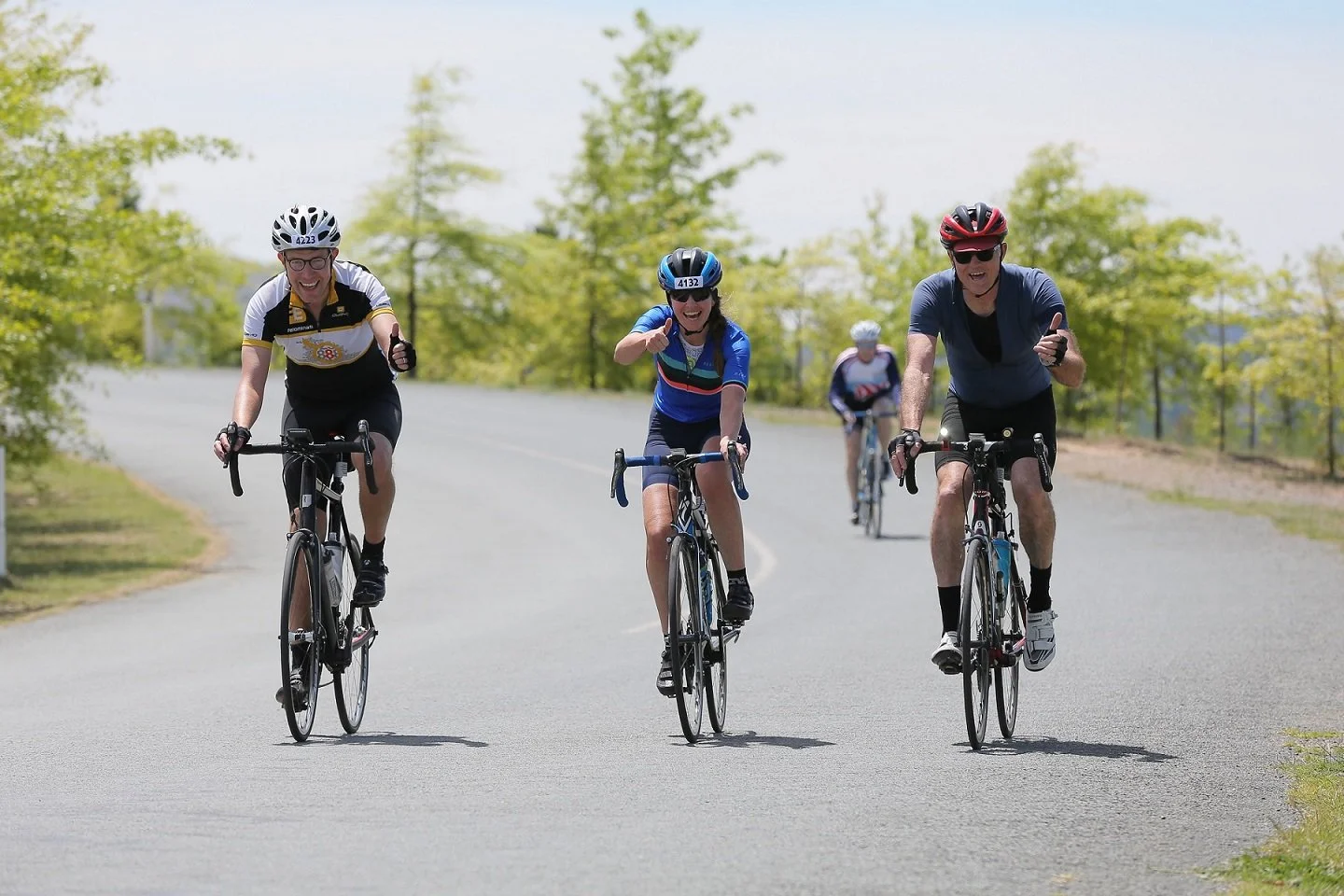
Find your way
Build a route around the rider you are today.
Compare Pedal Power route ideas with the official Canberra cycling map, then test the route at a quiet time before using it for an important trip.
Start near home
A familiar park, lake path or trip to the shops removes one layer of uncertainty.
Check the whole route
Look for hills, busy crossings, path gaps, road sections and the surface before leaving.
Test it quietly
Ride at a quieter time, ideally with a friend, before relying on the route for work or an appointment.
Keep a Plan B
Know where you can turn back, stop safely or shorten the trip if weather or confidence changes.
15–20 minutes
Repeat a flat, traffic-free loop and practise controlled starts and stops.
One useful destination
Ride to a nearby shop, café, park or friend’s home using the calmest route.
Make it familiar
Repeat the same trip or practise it with a friend until it feels routine rather than new.
ACT road and path essentials
Be visible, predictable and considerate.
This is a practical starting summary, not the complete law. Check the official ACT guidance if you are unsure or before relying on a rule.
Choose the environment that matches your skills and comfort.
Ride at a speed that leaves time to respond, especially around children and busy areas.
Ring early, slow down, wait for space and pass with a safe gap rather than squeezing through.
Move predictably and signal before changing your position.
Do not assume being on a bicycle changes the basic obligations that apply on the road.
On narrow or busy paths, single file may be the more considerate choice.
When it does not feel easy yet
Most beginner problems have a practical fix.
Feeling awkward, slow or uncertain does not mean cycling is not for you. Change the setup, environment or size of the challenge.
“I wobble when I start.”
Try: one pedal raised, eyes ahead and a purposeful first push in an easy-to-middle gear.
“Hills stop me.”
Try: shift down before the hill, pedal gently and choose flatter routes. Walking a steep section is completely valid.
“The saddle hurts.”
Try: shorter rides, comfortable clothing and a position check. Persistent pain or numbness needs attention, not endurance.
“The gears confuse me.”
Try: practise with one control at a time on a flat path. Easier gears make pedalling lighter; harder gears move further per turn.
“Traffic scares me.”
Try: do not begin there. Build control on traffic-free paths, choose quieter streets or practise the route with a Ride Guide.
“I worry about breakdowns.”
Try: start close to home with a charged phone. Learn puncture repair later through a workshop. You do not need every skill on day one.
Local help in Canberra
You do not have to work it out alone.
Choose structured teaching, one-to-one route support, access to a bike or practical repair skills.
Cycle Well
Patient adult and teen instruction in a calm, traffic-free setting.
See adult coursesRide Guides
Connect with a volunteer who can help plan or practise a Canberra journey.
Find a guideBike Library
Try everyday riding with a free refurbished bicycle loan for adults or children.
Plan a visitMaintenance workshops
Learn safety checks, puncture repair and common adjustments hands-on.
Explore workshopsYour next step can be small
Make the first ride the one you want to repeat.
Choose a calm route, give yourself time and ask for support when you need it. Confidence comes from rides that feel achievable.