Traffic Etiquette on main community routes in Inner Canberra
The Garden City Cycleway is a major community route connecting the City, Braddon and Ainslie. It is physically separated from the road, making it a more comfortable place to ride and walk.
As the cycleway passes through the inner north, it crosses several driveways and side streets. At these crossings, people riding and walking need to watch for vehicles, while drivers must check carefully for people approaching along the cycleway.
A recent near miss
A Pedal Power member recently told us about a near miss while riding towards the city.
A driver was leaving a side street and preparing to turn left onto the road. The driver was checking for approaching road traffic but did not see the bike rider coming along the cycleway. Fortunately, both reacted quickly and avoided a collision.
The driver later said, “I looked right, but I didn’t see you.”
The rider’s Strava record showed they were travelling at 16 km/h when they began braking. This is not a particularly high riding speed, but the limited sightlines gave both people very little time to see each other and respond.
To demonstrate the problem, a trike was positioned on the cycleway at approximately the distance where a rider travelling at 20 km/h could stop comfortably before reaching the crossing.
What the photos show
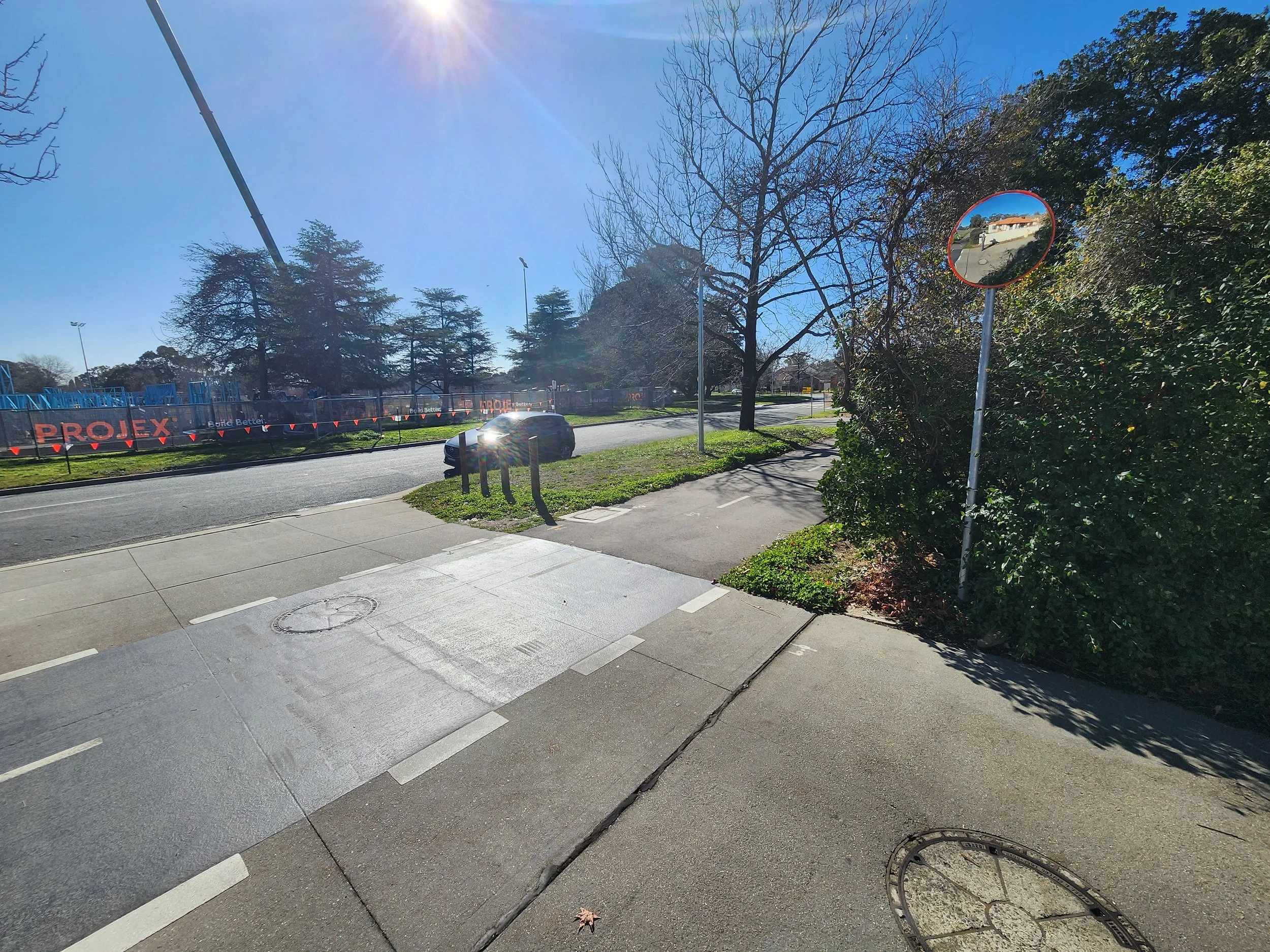
The driver’s first view
This photo shows where a driver would reasonably look to the right when checking for vehicles on the road. The approaching trike cannot be seen because it is hidden behind the hedge. The mirror does not show it either and may draw the driver’s attention away from the cycleway.
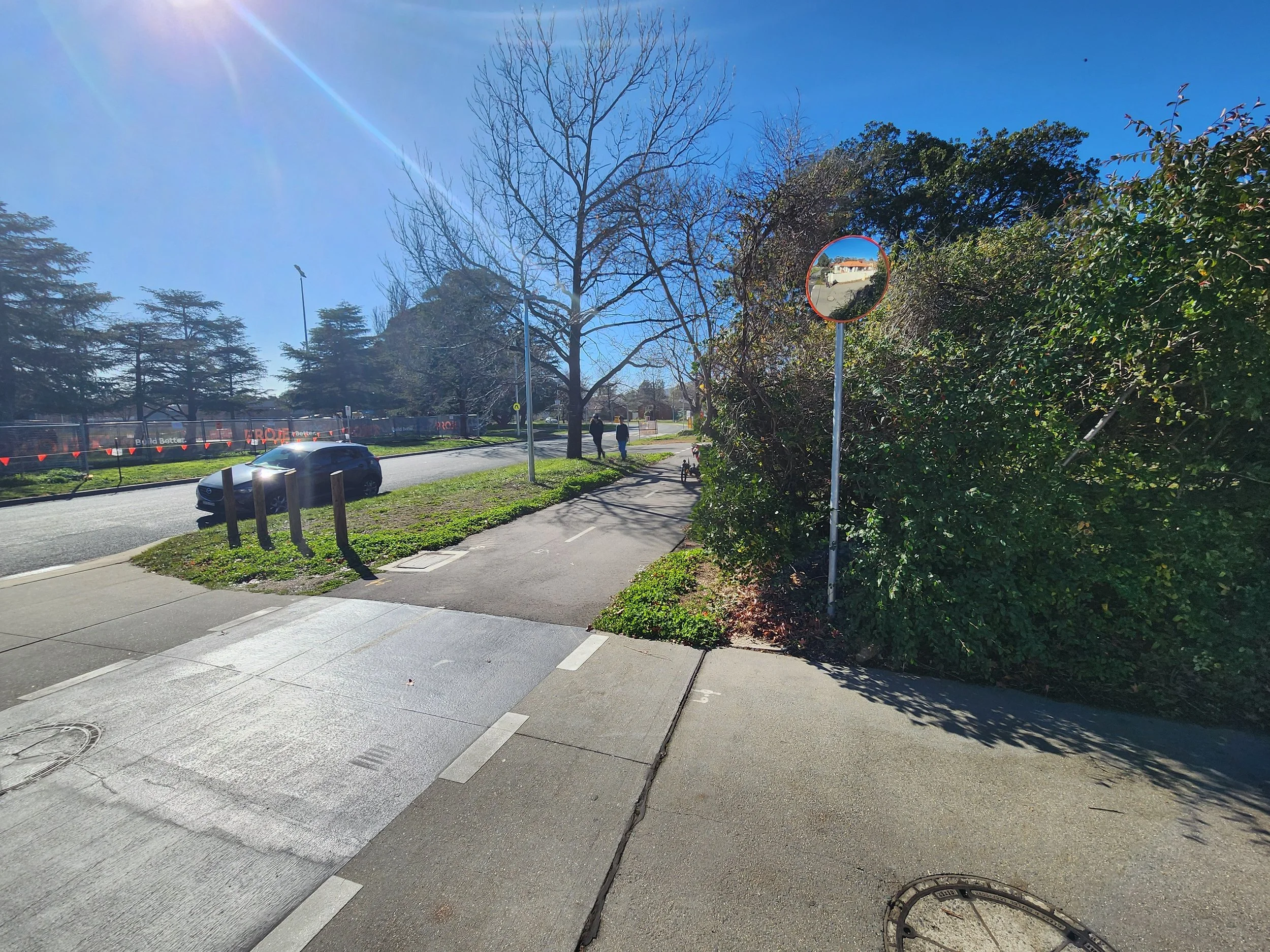
The rider begins to appear
As the driver moved closer to the crossing, he was reported to be looking left, toward the direction to control the left turn. This view is consistent with the driver controlling the vehicle, after checking for oncoming traffic. In this case, both the driver and the rider had limited, but sufficient time to react
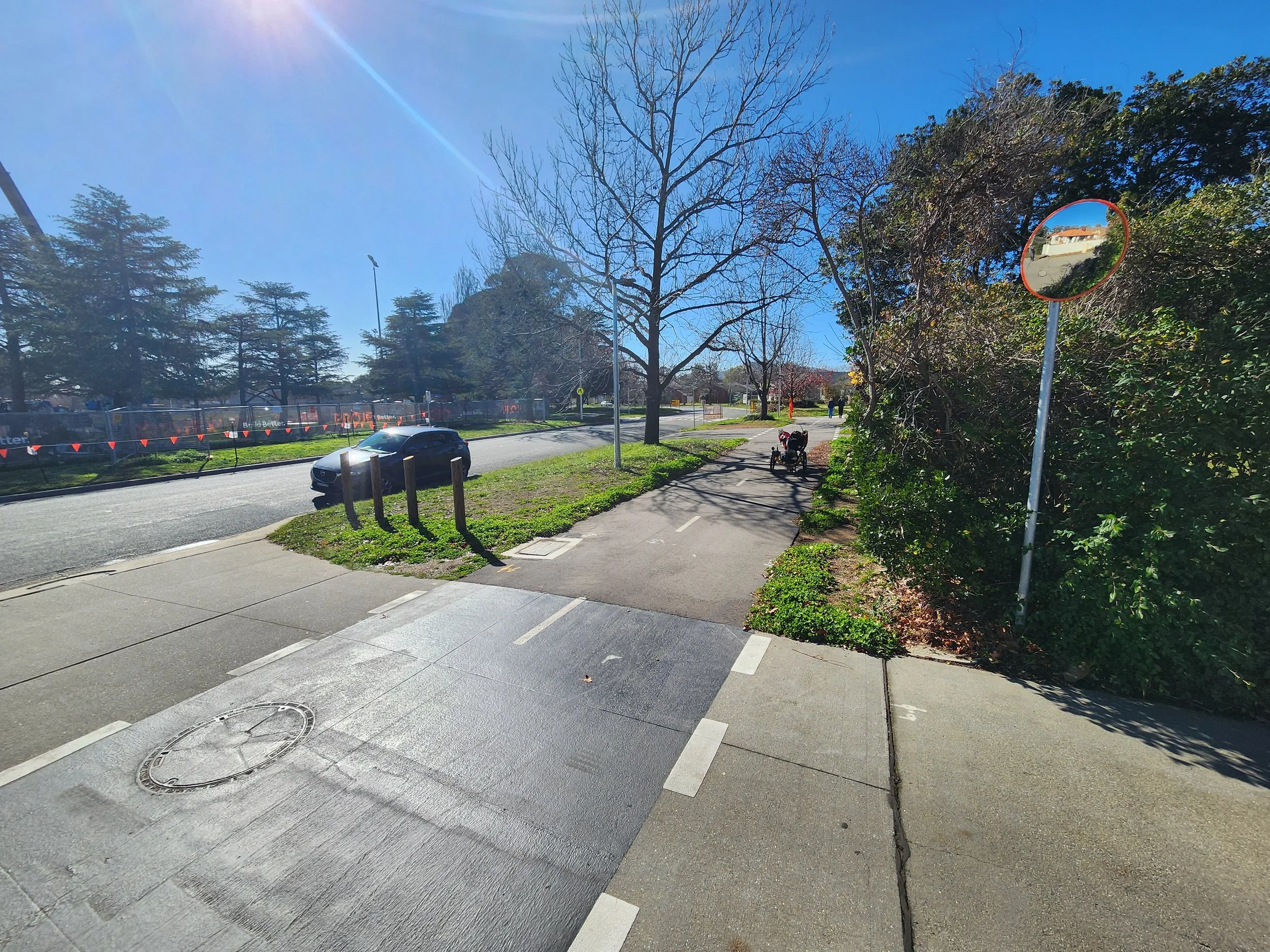
The point where the rider is clearly visible
If the driver had checked the cycleway from this position, they would have observed the approaching bike rider from the right and likely stopped to give way.
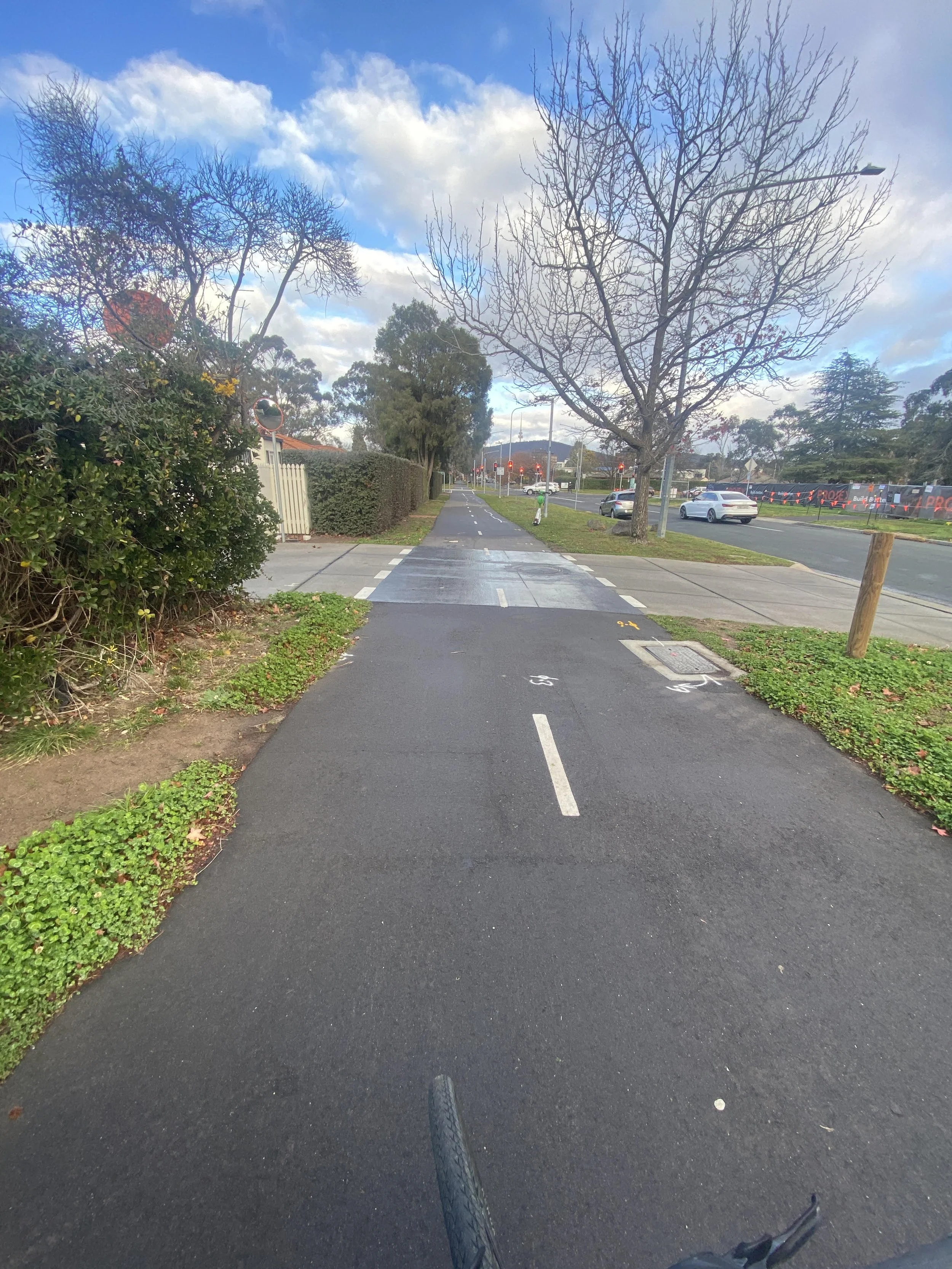
The bike rider’s view
The rider’s view is also restricted. The hedge makes it difficult to see a vehicle approaching from the side street until the rider is close to the crossing. At a normal riding speed, this leaves little time to brake if a vehicle suddenly appears.
What can drivers do?
When leaving a driveway or side street that crosses the cycleway:
Before crossing the give way dotted line, check for traffic on the cycleway in both directions, and give way if necessary."
Check the cycleway separately from the road.
Drivers should not focus only on traffic on the road. People on the cycleway are closer to the crossing and may be harder to see.
What can bike riders do?
When approaching a crossing with limited visibility:
Slow down if you cannot see whether a vehicle is approaching.
Be ready to stop, even when you have priority.
Where it is safe, adjust your position on the cycleway to improve your view.
Watch approaching drivers and riders to check whether they have seen you.
A simple improvement
The most effective solution at this location is also the simplest: could someone, anyone, trim the hedge!!
Clear sightlines give everyone more time to see each other, react and avoid a collision. Regular maintenance is essential to ensure community routes remain safe and comfortable for everyone.y could slow down, or if safe, move to the right side of the cycleway to improve the sightline: that’s what I frequently do on this route.