Madrid’s Cycling Culture: Best & Worst
Mikayla Weber | Communications & Marketing Officer
Now that I’m back in Canberra after spending six months living in Madrid, I’ve had the chance to reflect on Madrid not just as a visitor, but as someone who lived there and navigated its streets daily. From commuting to uni and running errands to exploring new neighbourhoods, cycling offered a unique lens through which to understand how Madrid works and where it falls short.
Madrid as a city presents a curious contradiction. While it invests in sustainable transport, expands bike-share schemes, and promotes greener mobility, some of its busiest streets remain deeply hostile to cyclists.
Gran Vía: A Case Study in What Not To Do
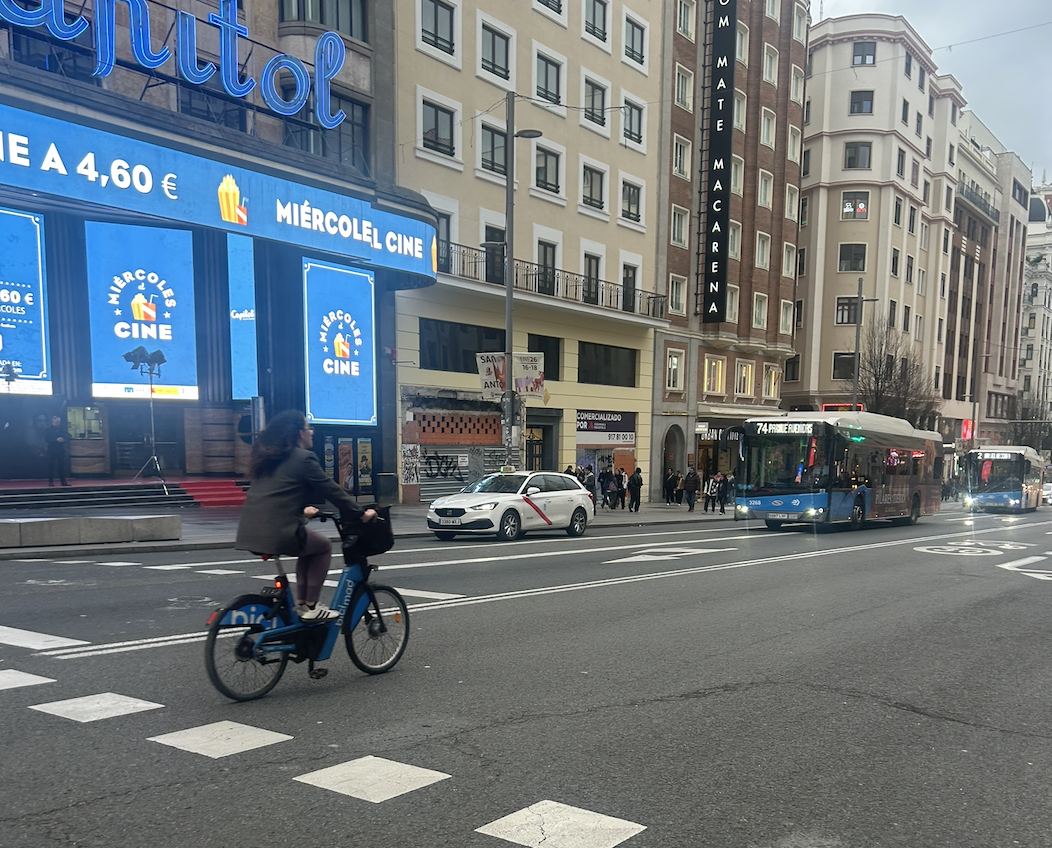
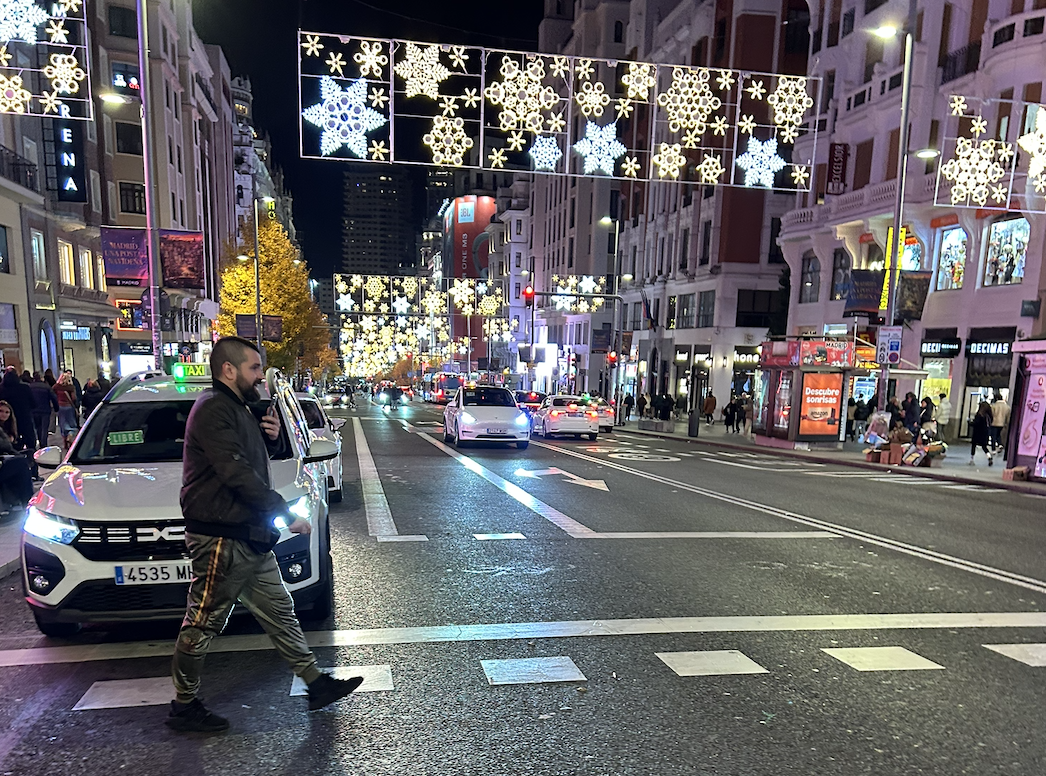
Let’s start with the most shocking example.
Gran Vía, Madrid’s busiest and most iconic street, has a bike lane painted directly between two lanes of traffic.
Not separated. Not protected. Painted.
And then, just when you start to adjust… it ends. Completely.
As someone familiar with Northbourne Avenue, which can feel stressful to cycle at times, Gran Vía is somehow worse. The traffic volume, noise, and tourist density make this design not just inconvenient but genuinely unsafe. For a city aiming to promote active transport, this is a glaring failure of urban planning. If bike lanes are meant to encourage people to cycle, this one achieves the opposite.
Where Madrid Gets It Right
Despite these shortcomings, Madrid also offers some genuinely impressive examples of cycling culture and infrastructure, and this is where the city deserves credit.
BiciBús [BikeBus] Culture
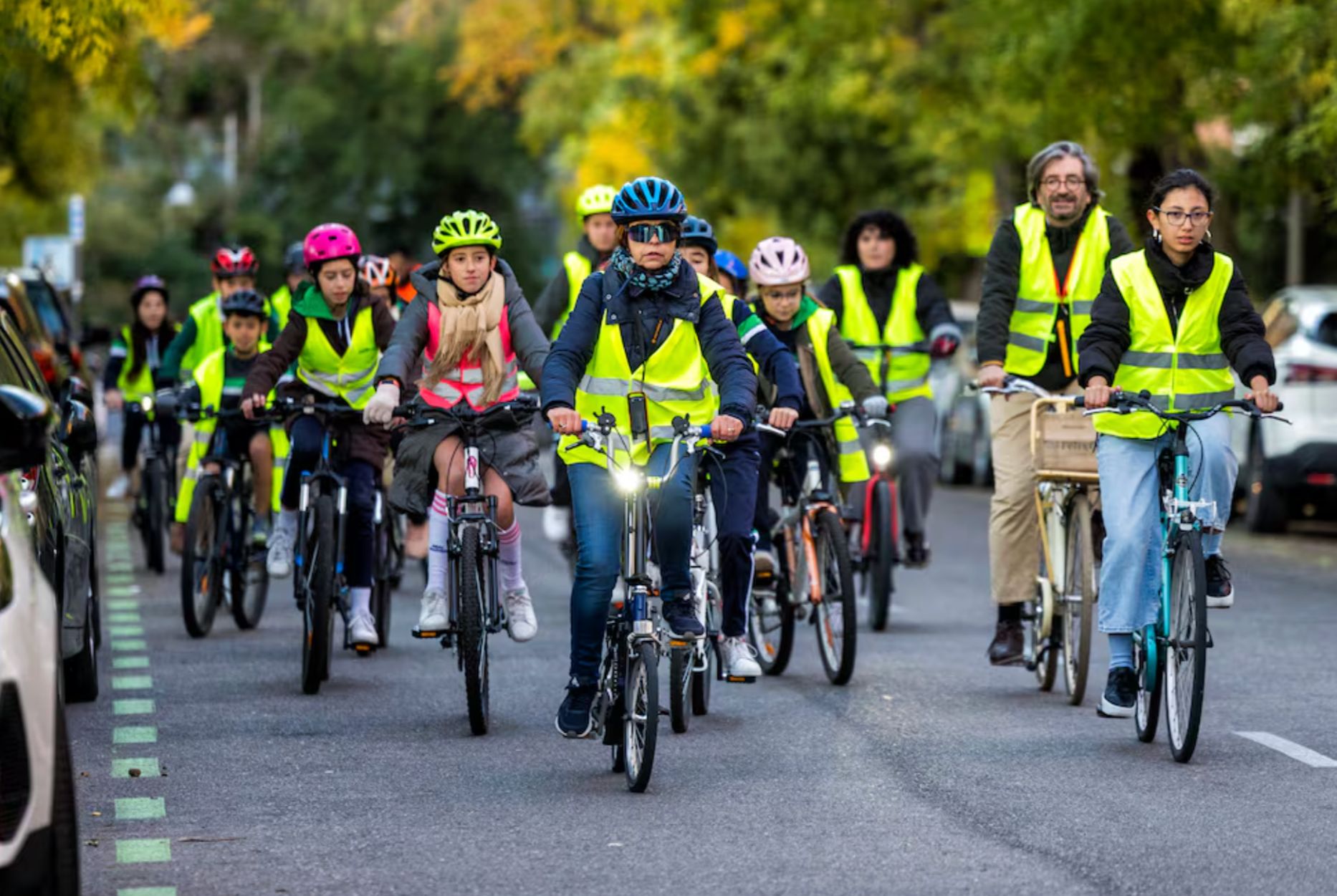
Image Credit: Claudio Álvarez via. El Pais
One of the most encouraging things I saw in Madrid wasn’t new infrastructure, but bicibús culture. Across neighbourhoods, groups of kids ride to school together each week, led by parents and teachers, navigating traffic with high-vis vests and walkie-talkies. It was really wholesome and warming to watch on my commute.
Some of these bike buses have been running for years, long enough to spawn traditions, including the occasional “bici-churro” finish (ride to school, then churros for the volunteers after). What stood out was that these bike buses exist despite some of the worst parts of Madrid’s cycling conditions, not because of them: a grassroots response to streets that can still prioritise cars over people.
High-Quality Cycling Zones
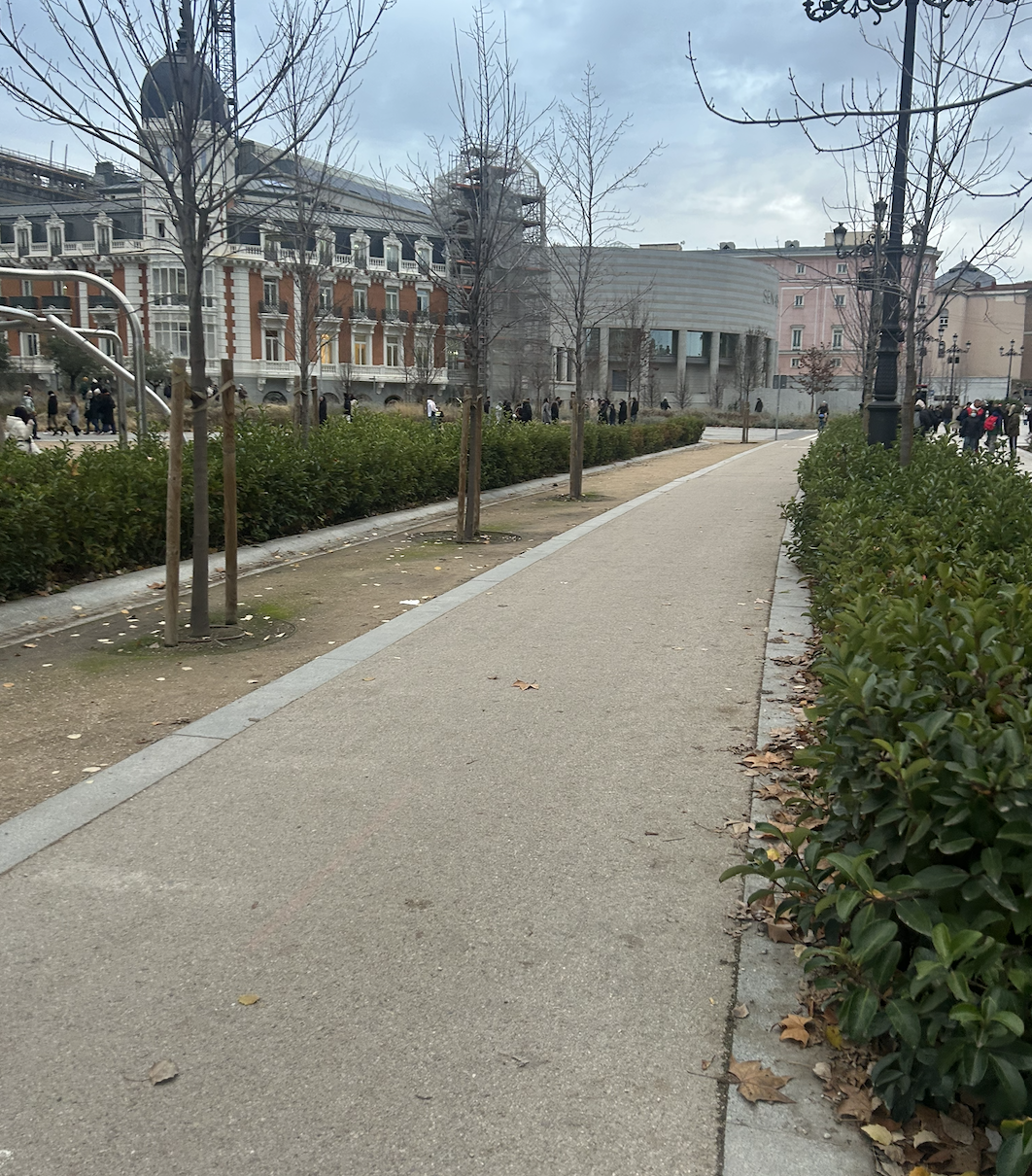
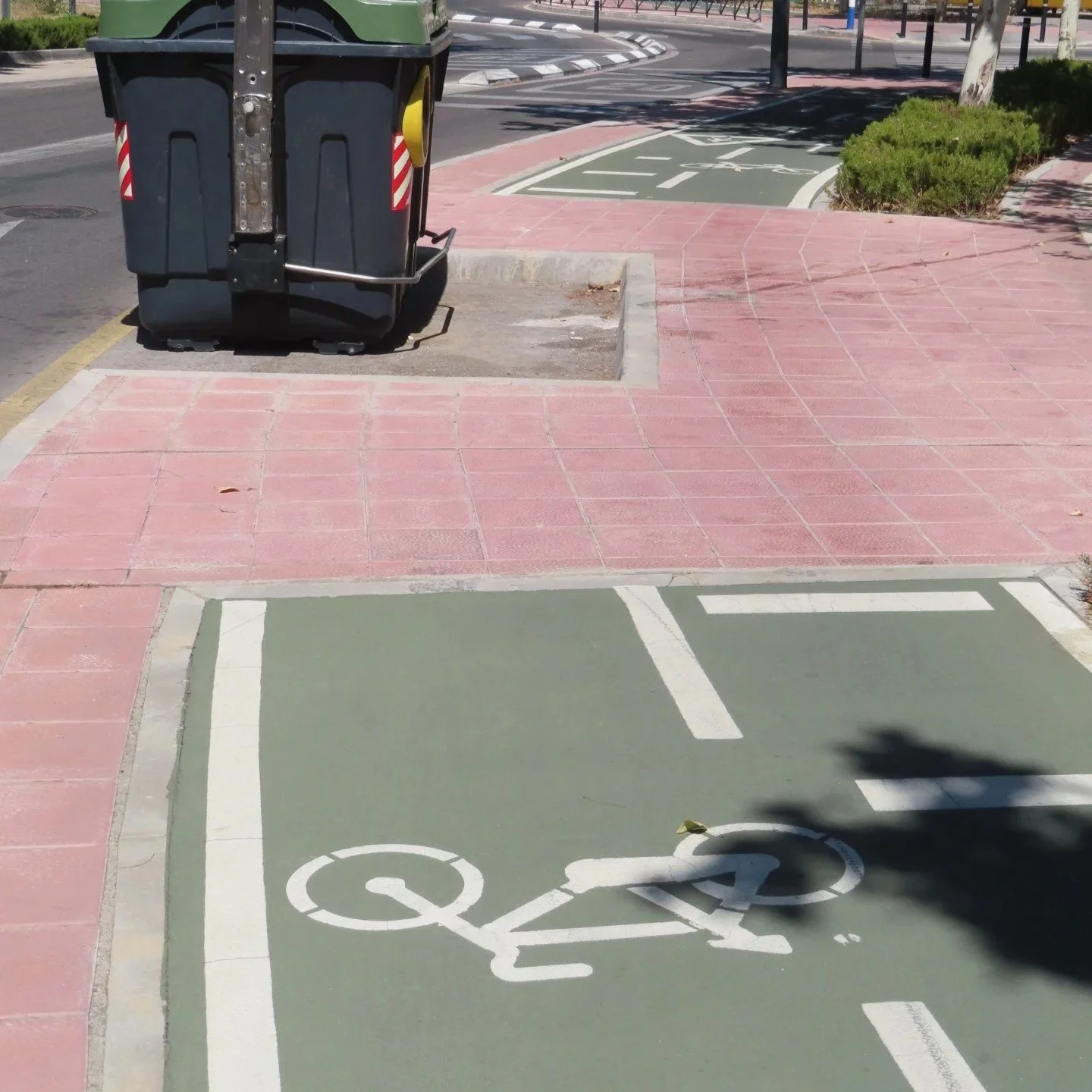
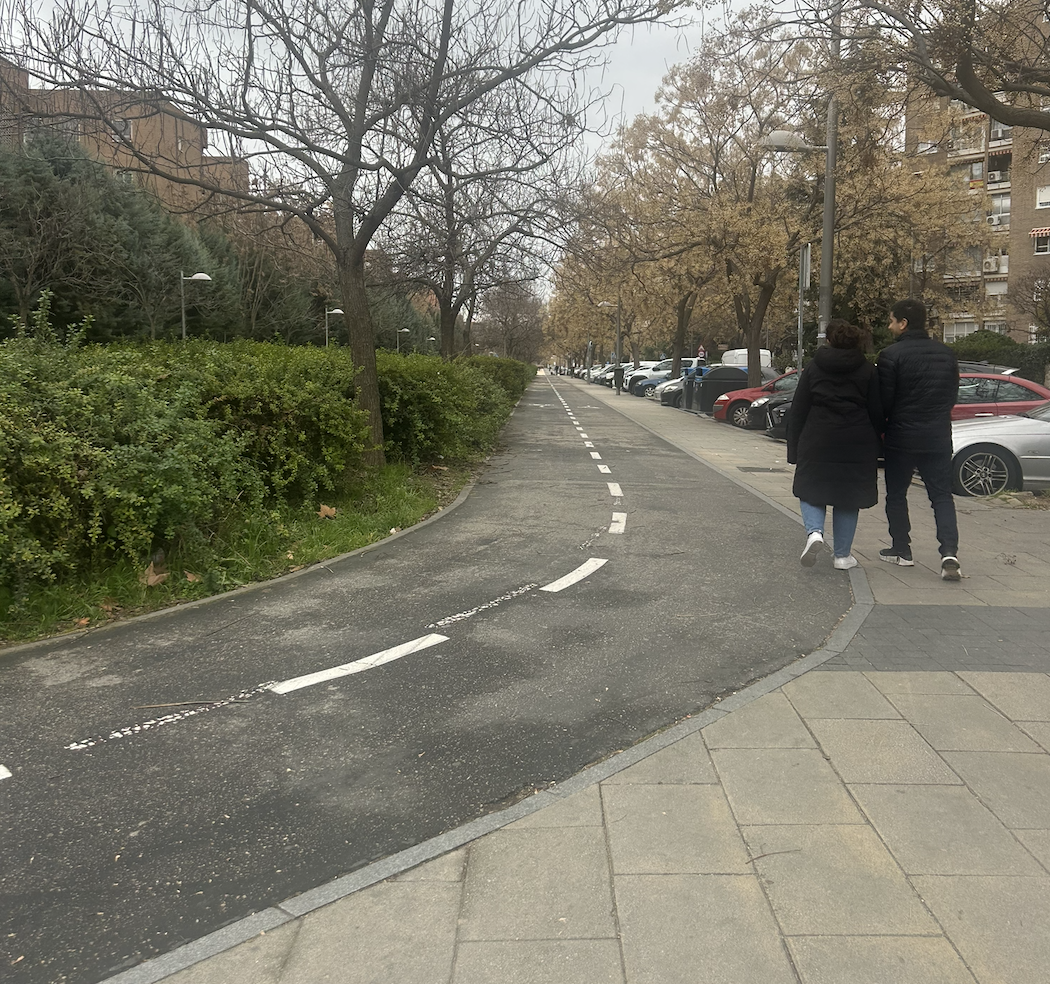
Areas such as Plaza de España and Madrid Río, a long green corridor running through the city, offer:
Clear, well-marked and… segregated lanes
Reduced vehicle dominance (all these green zones were police vehicles only)
Safer interactions with pedestrians
A calmer, more enjoyable riding experience
These spaces feel intentional. They’re designed with cyclists in mind, rather than retrofitted as an afterthought.
BiciMAD: Convenient, Affordable, Effective
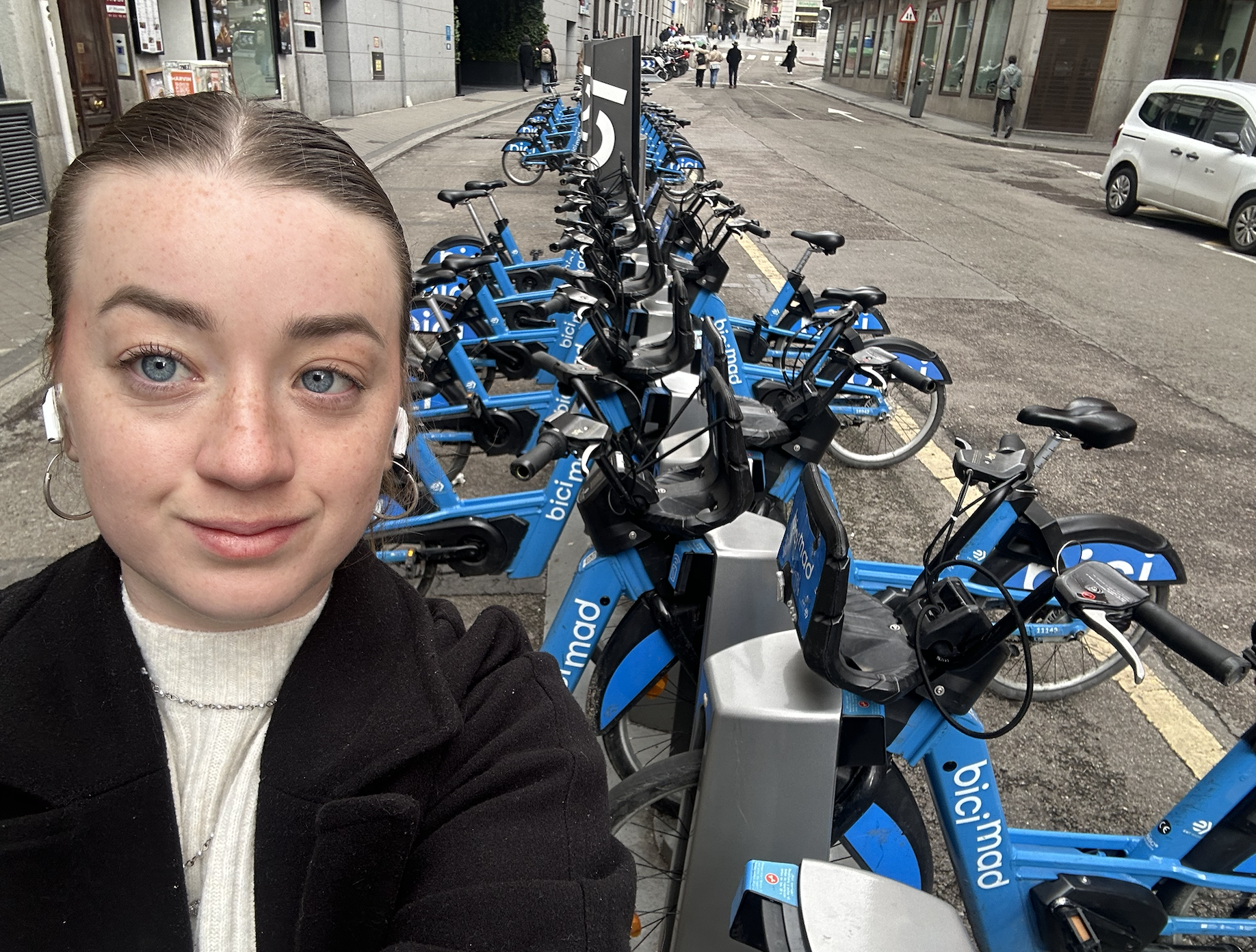
Madrid’s public bike-share system, BiciMAD, is one of the strongest I’ve encountered in my travels.
✔️ Over 630 stations across the city
✔️ Reliable and easy to access electric-assisted bikes
✔️ First 30 minutes of every ride are FREE!
This makes short trips fast, affordable, and appealing, especially for people who don’t own a bike. It removes many of the barriers that often stop people from choosing cycling over driving or public transport.
For visitors and locals alike, BiciMAD makes cycling feel like a normal, everyday option.
A City in Transition
Madrid is clearly trying. Living there made that obvious. The investment in cycling infrastructure, the expansion of bike-share stations, and the broader push toward sustainable transport all point to a city in transition. But experiencing it day to day also made the gaps impossible to ignore.
For me, Madrid came to represent both the promise and the challenge of adapting a historic city for modern mobility. With stronger protection on major roads, particularly along the Gran Vía, and more consistent planning, it has the potential to become one of Europe’s great cycling cities (okay, maybe just in southern Europe).
And when it gets it right, it really does get it right.